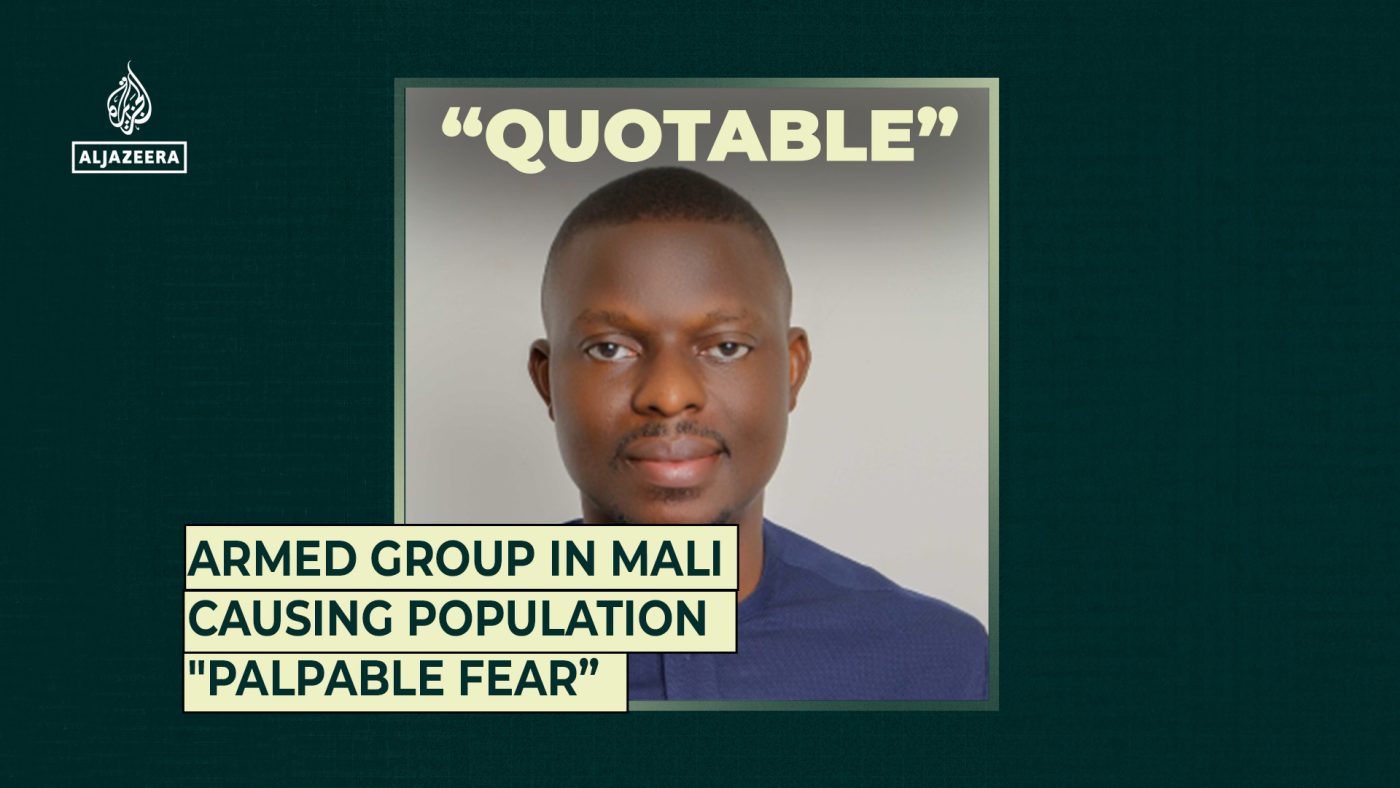

“We all have a reason to be genuinely concerned.”
Those are the words of Oluwole Ojewale of the Institute for Security Studies, summing up mounting alarm over the growing presence of an armed group in Mali that has links to al-Qaeda. Residents, local leaders and analysts say the group’s expansion is producing a palpable climate of fear across affected communities.
The concern is multidimensional. Beyond the direct threat of violence, the group’s activities — including intimidation, coercive control of territory, and tactics that restrict movement and economic activity — are disrupting daily life. Civilians report heightened insecurity at markets, along roads and around public services, and many communities face increasing pressure from forced recruitment, levies and threats that undermine normal livelihoods.
Security experts say the group’s spread also weakens state authority in contested areas. Where government presence recedes, basic services and humanitarian access become more difficult, leaving already vulnerable populations with fewer protections. That vacuum can deepen grievances, degrade local governance and create conditions that favour further extremist entrenchment.
There are wider regional risks as well. Cross-border movements, porous frontiers and displacement can amplify instability, complicating efforts by neighbours and international partners to stabilise the Sahel. Analysts warn that without timely, coordinated responses, local crises can become broader security and humanitarian emergencies.
Ojewale and other observers argue the situation calls for a comprehensive approach: protecting civilians and restoring security, while also strengthening local governance, ensuring humanitarian access, and addressing the social and economic factors that fuel radicalisation. Preventing further entrenchment of the armed group will require cooperation between Mali’s authorities, regional actors, civil society and international organisations.
As the situation evolves, many Malians say their primary concern is survival and safety. The sentiment Ojewale captures reflects a wider urgency: if patterns of expansion and intimidation continue unchecked, the human cost will grow and the prospects for peace and recovery will diminish.
Published On 10 Nov 2025