
At least two people, including a child, were killed in an Israeli drone strike east of Khan Younis in southern Gaza, Al Jazeera reporters in the territory said.
Hamas condemned what it called “daily and continuous violations” since a truce came into effect on October 10, saying Israel has maintained a campaign of bombardments and demolitions across the enclave. In a statement on Telegram, Hamas said Israeli attacks had killed 271 people — more than 90 percent of them civilians — and wounded 622 since the ceasefire began. The Israeli military said those killed on Monday had posed “an immediate threat” to its forces.
Israeli forces have also been demolishing homes inside the so-called “yellow line,” the temporary withdrawal boundary set by the ceasefire. Al Jazeera correspondents reported intensified demolition operations in eastern Khan Younis, with Hamdan Radwan, mayor of Bani Suheila, saying “every two-storey building or house is being targeted.” Correspondents confirmed residential blocks are being blown up in central Gaza as well, and satellite images and field footage show large areas reduced to rubble.
Israel continues to restrict aid deliveries, a key term of the ceasefire, according to Gaza officials and aid workers. Hamas said Israel refused to allow at least 600 aid trucks daily, including 50 carrying fuel, despite the agreement. On Sunday, 270 trucks entered Gaza through the Karem Abu Salem (Kerem Shalom) and al-Karara (Kissufim) crossings: 126 carrying humanitarian aid, 127 commercial goods, 10 fuel trucks and seven with cooking gas.
Despite an increase in aid flow since the truce, Palestinians still face extreme shortages of food, medicine, clean water and other essentials, and many remain homeless after nearly two years of bombardment. UNRWA says between 500 and 600 trucks of supplies are needed daily to meet Gaza’s basic needs, but Israel’s restrictions have hampered deliveries. John Whyte, UNRWA’s senior deputy director for Gaza operations, told The Journal that Israel had barred UNRWA vehicles and required supplies to be handed to other agencies and the UNRWA logo removed, creating major logistical delays. Al Jazeera’s Hind Khoudary reported that in northern Gaza, where many displaced families are returning, the UN has recorded no direct aid entry for 75 days, leaving people queuing for water and unable to afford basic food.
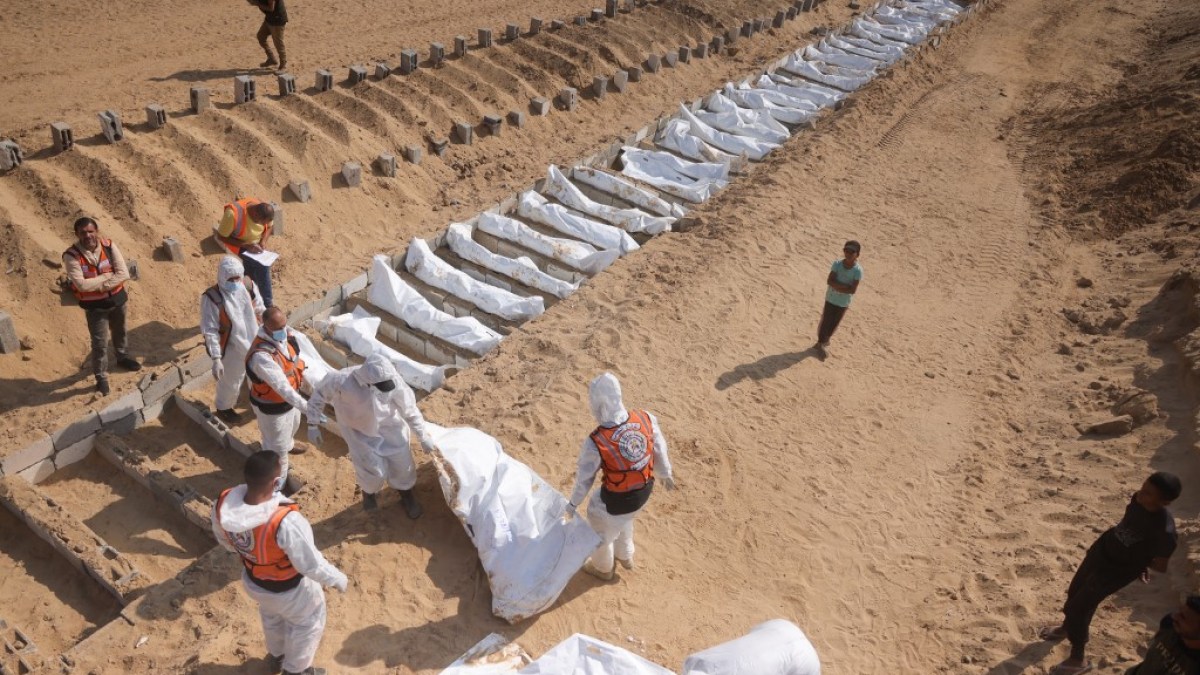
As part of the ceasefire body-exchange arrangement, Israel handed over the remains of 15 Palestinians to Gaza authorities on Monday. The Red Cross transferred the bodies to Nasser Hospital in Khan Younis, Wafa reported. This was the 12th such exchange under the deal, bringing the total bodies returned to 315; only 89 have been identified so far, many suffering decomposition and, Wafa said, showing signs of torture. Hamas said it fulfilled its obligations under the agreement, handing over 20 living captives within 72 hours and returning 24 of 28 bodies while sharing coordinates for others in areas under Israeli control.
The World Health Organization announced that al-Kheir Hospital in Khan Younis has resumed operations after months of closure due to Israeli attacks. WHO said it helped restore power, sanitation and water systems and supplied medical equipment. A new 20-bed nutrition stabilization centre has opened there, bringing the total number of such centres in Gaza to eight; these facilities treat children suffering from severe malnutrition complicated by infections and dehydration.