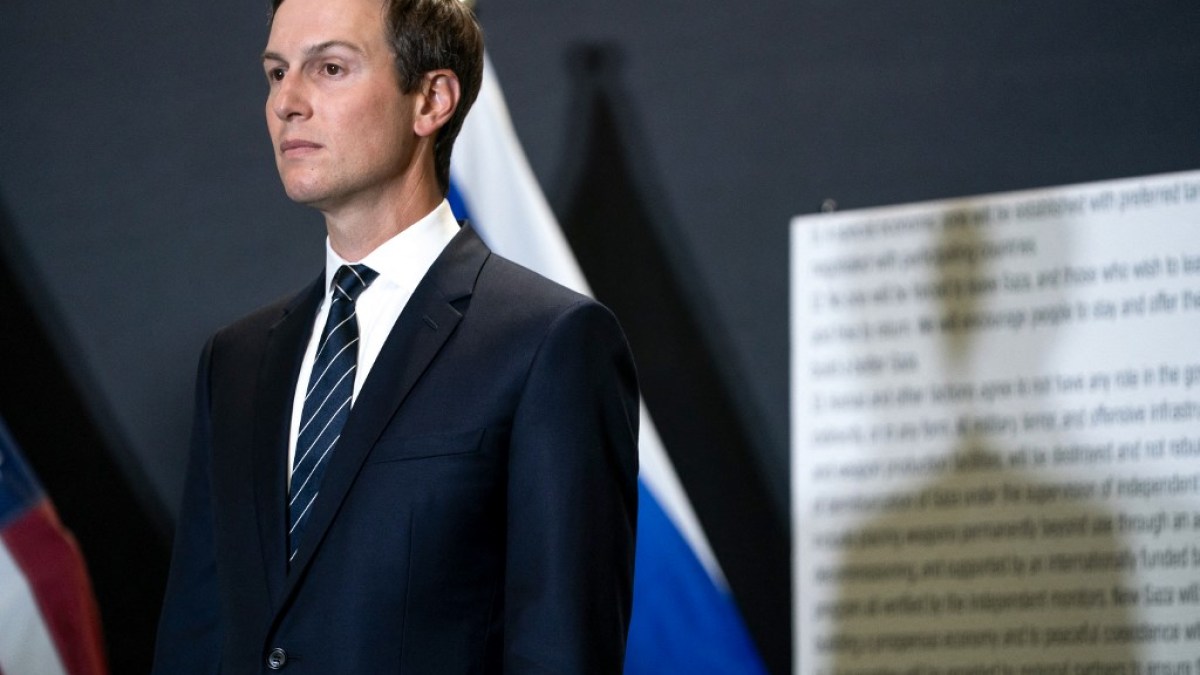

Around 200 Hamas fighters remain trapped in tunnels beneath Rafah after Israel refused to grant them safe passage, creating a flashpoint that threatens a fragile US-brokered truce. Jared Kushner, the US mediator and President Trump’s son-in-law who helped negotiate the ceasefire, met Israeli Prime Minister Benjamin Netanyahu in Jerusalem on Monday to press efforts to stabilise the agreement.
The ceasefire, backed by the United States and regional partners, has paused months of Israeli bombardment that Palestinian authorities say flattened much of Gaza and killed more than 69,000 people, most of them women and children. Kushner’s talks with Netanyahu were aimed at resolving sticking points in the broader peace plan—known as a 20-point proposal—and ensuring the pause holds.
Israeli government spokeswoman Shosh Bedrosian said the discussions centred on some of the plan’s most contentious elements: disarming Hamas, deploying international security forces, and forming a technocratic transitional government in Gaza that would exclude Hamas. Hamas has repeatedly said giving up its weapons is a red line; speaking to Israel’s parliament, Netanyahu warned Gaza would be “demilitarised, either the easy way or the hard way,” signalling a readiness to resume force if necessary.
The immediate crisis involves roughly 200 fighters reported trapped in Rafah tunnels, in an area still under Israeli control. Hamas has demanded safe passage for those fighters to Gaza’s interior, but Israel has refused. US Middle East envoy Steve Witkoff described a proposal to allow passage in return for disarmament as “a test case” for the wider plan. A Hamas official said talks over the group were ongoing and that Hamas wanted to settle the matter to avoid any pretext for Israel to break the truce, but the official rejected surrendering the fighters. A Palestinian source warned that any Israeli attempt to extract them by force could jeopardise the entire ceasefire.
Beyond this dispute, the ceasefire framework requires agreement on a transitional governing council excluding Hamas, the creation and deployment of a proposed stabilisation force, and terms for reconstruction and disarmament. The international force would likely need a United Nations mandate before deployment, and few countries have indicated they would participate without one. Potential contributors mentioned include Egypt, Qatar and Turkiye, while the United Arab Emirates has expressed hesitation; Emirati presidential adviser Anwar Gargash said the UAE would “probably not participate” under current circumstances.