Palestinian officials hailed local elections held Saturday in a Gaza neighborhood and across the Israeli-occupied West Bank as a successful step toward long-delayed national voting and eventual statehood.
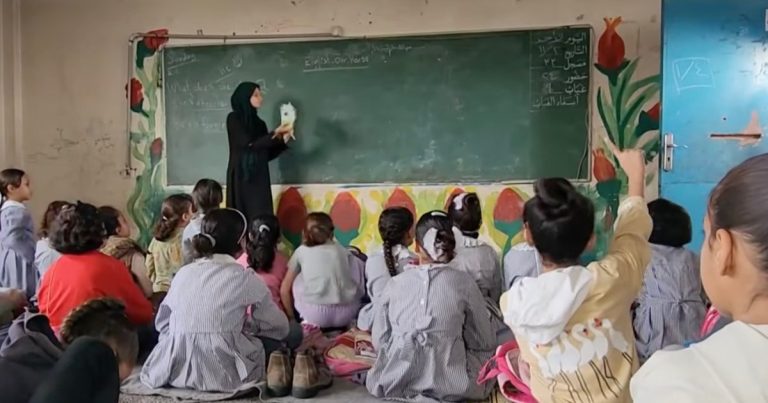
The Palestinian Authority described the vote in Deir al-Balah, in central Gaza, as a largely symbolic pilot intended to politically link Gaza and the West Bank. It was the first election in part of Hamas-run Gaza in more than two decades. Deir al-Balah, like much of Gaza, suffered heavy damage during two years of war but avoided an Israeli ground invasion. Turnout there was about 23 percent, with officials citing large-scale displacement and outdated civil registry records as major obstacles to higher participation.
Hamas, which controls the Gaza territory covered by the current ceasefire arrangements, did not field candidates and made no effort to block the vote.
In the West Bank, turnout was roughly 56 percent, amounting to more than half a million voters, a level similar to recent local contests. Many races were uncontested. Candidates had to accept the Palestine Liberation Organization’s platform, which recognizes Israel and rejects armed struggle, a requirement that effectively sidelined Hamas and other armed factions. Results were led by independents and by Fatah, the movement that heads the Palestinian Authority and claimed victory in many races.
Rami Hamdallah, chair of the Ramallah-based Central Election Commission and a former prime minister, called the Deir al-Balah vote “a significant achievement” and said authorities hope to expand polling across Gaza. He said the election reflects a measure of national unity and expressed the hope that presidential and legislative elections would follow.
These contests were for local councils responsible for municipal services such as water, roads and electricity. Recent electoral reforms allow voters to choose individuals rather than party lists, reducing formal party control, although family and clan ties remained important in many campaigns.
The Palestinian Authority has not held a presidential election in 21 years, and public support for the PA and President Mahmoud Abbas has waned amid corruption allegations and frustration over settler expansion in the West Bank. Abbas, now 90, was elected in 2005 to what was supposed to be a four-year term; the PA has not held presidential or legislative elections since 2006.
Prime Minister Mohammad Mustafa called the local polls “another step on the path to full independence.” Israel, led by Prime Minister Benjamin Netanyahu, opposes the establishment of a Palestinian state. Many Palestinians, including prominent businessman Bashar Masri, welcomed the municipal votes but said they are not a substitute for general national elections and urged that presidential and parliamentary voting be scheduled.