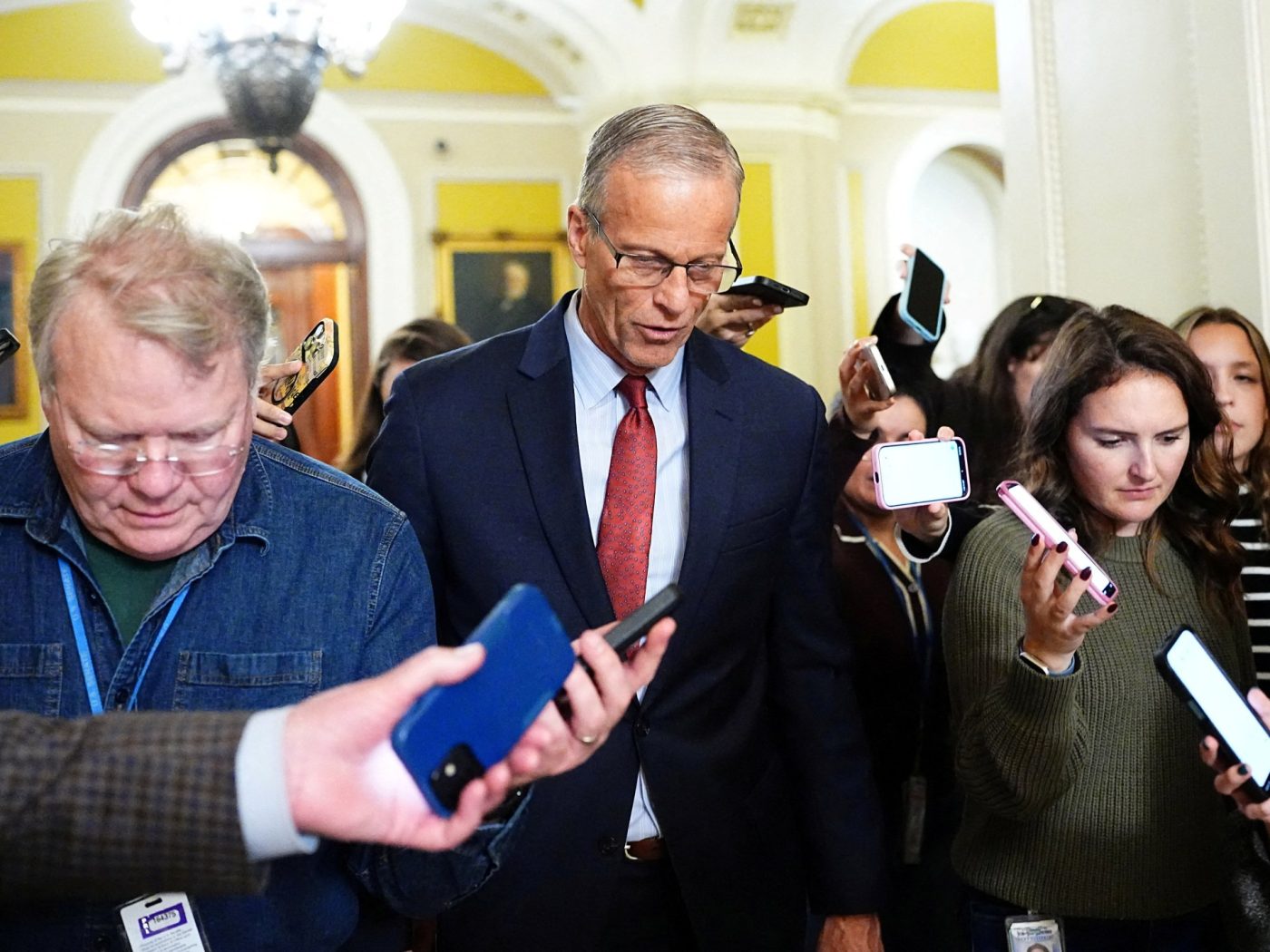

The US Senate took a first procedural step toward ending the country’s longest government shutdown by voting to advance a Republican-led stopgap funding package that would keep the government running until January 30. The move came after weekend negotiations and as the shutdown entered its 41st day, surpassing the 35-day record set in 2018.
What the Senate voted on
Senators approved a cloture vote (60-40) to end debate limits and allow consideration of the measure. That procedural vote does not enact the bill but permits debate and later votes. Once cloture is invoked, subsequent votes on the bill require only a simple majority in the Senate.
If the Senate passes the package, the same text would also need approval from the House of Representatives and the president’s signature to become law. Republicans hold 53 Senate seats to Democrats’ 47, and 220 House seats to Democrats’ 212, but 60 votes were required to advance the measure.
What’s in the package — and what isn’t
The proposal would provide yearlong funding for certain parts of the government, including food assistance programs and the legislative branch. It does not extend Affordable Care Act (ACA) health insurance subsidies that Democrats have insisted must be preserved. Centrist Democrats and Republicans, however, reached a separate deal to hold a December vote on extending healthcare tax credits that are set to expire.
Democrats were reportedly promised that furloughed federal employees would be reinstated and that expiring healthcare tax credits would be addressed, according to reporting from Politico. No full text of the bill had been released publicly at the time of the vote.
Reactions from leaders
Senate Majority Leader John Thune praised the vote as a bipartisan step to address the crisis. Senate Democratic Leader Chuck Schumer said the bill fails to address the healthcare crisis and said he could not support it “in good faith.” President Trump urged Republicans to send ACA subsidies directly to people’s bank accounts via a Truth Social post, and earlier in the year his “Big Beautiful Bill” cut Medicaid funding by $930 billion over the next decade.
Who voted to advance the bill
The cloture motion passed 60-40. All Senate Republicans except Rand Paul voted to advance the measure. Eight Democratic caucus members joined them: Dick Durbin (Illinois); Jeanne Shaheen and Maggie Hassan (New Hampshire); John Fetterman (Pennsylvania); Catherine Cortez Masto and Jacky Rosen (Nevada); Tim Kaine (Virginia); plus Independent Angus King of Maine, who caucuses with Democrats.
Democratic pushback
Several Democrats opposed the motion. Schumer and progressive voices like Bernie Sanders criticized the decision to advance a bill that does not secure ACA subsidies. Connecticut Senator Chris Murphy cautioned that recent state and local election results reflected voter expectations that Democrats would hold firm in negotiations. Democrats had previously voted 14 times to keep the government closed until ACA tax credits were extended.
Impact of the shutdown
The shutdown has shuttered or disrupted services nationwide: flights were affected, food aid was cut, and more than 1.3 million federal workers were either furloughed or working without pay. The Congressional Budget Office estimated about 750,000 federal employees were furloughed, translating to roughly $400 million in lost wages per day and about $16 billion in lost pay over 40 days. Independent analysts estimated the hit to US GDP at $7–14 billion, roughly a 1.5 percent drag in the quarter.
Millions have faced higher health insurance costs if ACA subsidies lapse, and nearly 42 million people lost Supplemental Nutrition Assistance Program (SNAP) benefits during the shutdown, leaving states and individuals to cover payments in some cases.
What’s next
With cloture passed, the Senate can proceed to debate and hold final votes that require only a simple majority. If the Senate approves the bill, it must clear the House and then be signed by the president. That process could take several days. If enacted, the package would bring back furloughed workers, reimburse states that covered federal program costs during the shutdown, prevent further layoffs through January, and ensure pay once the shutdown ends.