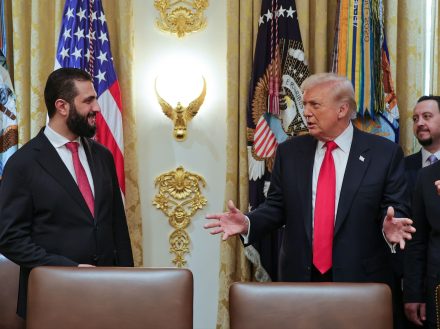
A federal judge dismissed the Justice Department’s indictments of former FBI Director James Comey and New York Attorney General Letitia James after finding the prosecutor who oversaw those cases was unlawfully appointed. That prosecutor is Lindsey Halligan, a 36-year-old former insurance litigator who served as one of former President Trump’s personal lawyers and later as a White House aide.
Trump appointed Halligan acting U.S. attorney for the Eastern District of Virginia in late September, the day after her predecessor, Erik Siebert, resigned under pressure from the president to pursue charges against Comey and James. In announcing the appointment, Trump praised Halligan as a “tough, smart and loyal attorney.”
U.S. District Judge Cameron McGowan Currie ruled that Halligan’s appointment violated a federal statute limiting interim U.S. attorneys to 120 days in the role because Siebert had already been serving in an acting capacity since January. After that statutory period, only district courts — not the Attorney General — may fill the vacancy. Currie described Halligan as “a former White House aide with no prior prosecutorial experience” and concluded she “had no lawful authority to present the indictment” against Comey or James. Because Halligan was the only signature on those indictments, Currie set those actions aside as unlawful. The Justice Department has said it will appeal.
Background and career
Halligan grew up in Broomfield, Colo., and studied politics and broadcast journalism at Regis University. She earned her law degree from the University of Miami in 2013, interning at the Miami-Dade Public Defender’s Office and the Miami Innocence Clinic. She began her career at Cole, Scott & Kissane, a Florida firm specializing in insurance defense litigation, and became a partner there in 2018. The firm highlighted a successful defense of a $500,000 property-damage claim as one of her victories.
Halligan first met Trump at an event at his West Palm Beach club in November 2021 and joined his personal legal team in 2022, helping to defend him in the Mar-a-Lago classified-documents investigation and appearing on television to discuss the case. A Trump-appointed federal judge later dismissed that classified-documents case in July 2024 on grounds related to an unlawful appointment, and the Justice Department dropped its appeal after Trump was reelected.
When Trump returned to the White House in January 2025, Halligan took on roles as White House senior associate staff secretary and special assistant to the president. She was visible alongside the president at events and led a controversial White House review of several Smithsonian Institution museums to “ensure alignment” with the administration’s cultural directives, a move criticized by historians as executive overreach.
From White House aide to acting U.S. attorney
Siebert, Halligan’s predecessor in the Eastern District of Virginia, had resisted bringing charges against Comey and James because his office found insufficient evidence. His resignation followed public pressure from Trump, who said he wanted the prosecutor removed. The president announced Halligan’s appointment the following day; Bondi’s office issued an authorization for Halligan as interim U.S. attorney less than 48 hours later.
Halligan’s office announced on Sept. 25 that a federal grand jury returned an indictment charging Comey with making a false statement and obstruction related to 2020 Senate testimony. That announcement came five days before the statute of limitations for the alleged offense would have expired and was Halligan’s fourth day on the job.
Accusations of missteps
Beyond the appointment defect, prosecutors’ critics and outside legal experts pointed to substantive missteps in how the cases were handled. The grand jury process drew scrutiny after a magistrate judge ordered the Justice Department to turn over all grand jury materials to Comey’s defense team, citing a “disturbing pattern of profound investigative missteps.” At a later hearing, Halligan confirmed the full grand jury never reviewed the final indictment against Comey — a procedural omission that could be fatal to a case.
Halligan initially sought three counts against Comey; the grand jury rejected one. A subsequent indictment with renumbered charges was not returned to the full grand jury for a new vote, a step that seasoned prosecutors say is essential. Instead, the indictment was presented without the required grand-jury vote, a failure former federal prosecutors called a basic error. Critics, including former federal prosecutor Elie Honig, said rushing such a complex, high-stakes case on Halligan’s fourth day on the job was reckless and could explain the procedural flaws.
Legal and political fallout
Currie’s ruling focused on the legality of Halligan’s appointment under 28 U.S.C. § 546 and on the formal validity of indictments she signed. Because she was the sole signatory, Currie found the indictments lacked lawful authority and set aside “all actions flowing from Ms. Halligan’s defective appointment.” The ruling leaves the Justice Department the option to appeal.
White House press secretary Karoline Leavitt dismissed the decision as a “technical ruling,” defending Halligan as qualified and legally appointed. Still, the episode has reignited scrutiny of the Justice Department’s handling of politically sensitive prosecutions, the use of interim appointments, and whether political pressure played a role in replacing a U.S. attorney who had resisted bringing charges.
The dismissal also underscores how procedural and appointment rules can derail high-profile prosecutions, even when the underlying investigations are public and contentious.