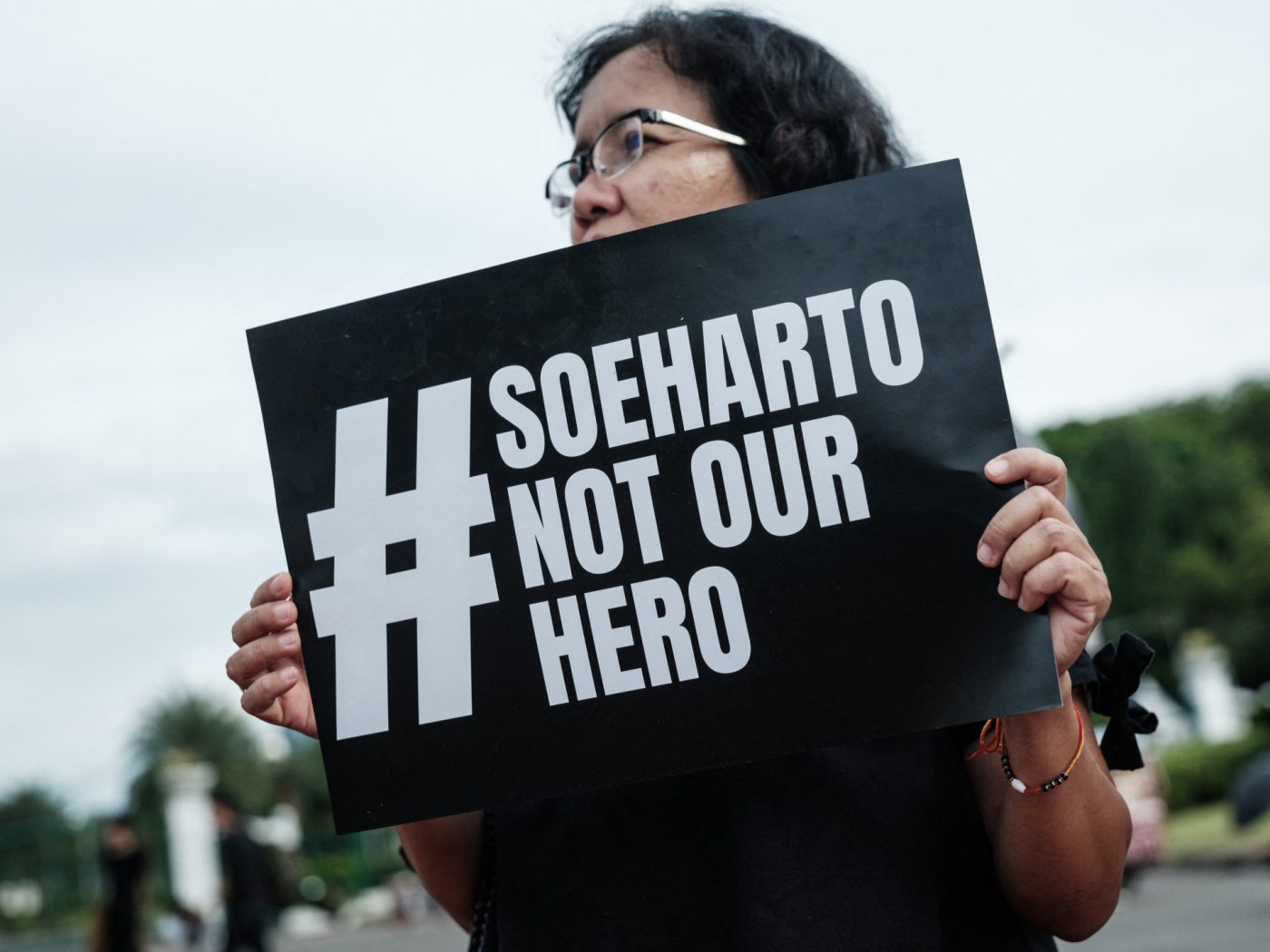

Indonesia’s former president Soeharto, whose 31-year rule was marked by economic growth as well as widespread abuses, was posthumously designated a national hero in a ceremony led by President Prabowo Subianto. The recognition prompted protests from pro-democracy activists, survivors and relatives of victims who say it whitewashes a brutal authoritarian past.
Soeharto (also spelled Suharto) rose from modest origins, joining the Dutch colonial army as a young man and later fighting with Republican guerrillas after Indonesia’s 1945 declaration of independence. A career military officer, he sidelined Indonesia’s first president, Sukarno, and became president in 1967 amid the chaos that followed a 1965 incident in which six military officers were killed. In the aftermath Soeharto oversaw a sweeping anti-communist purge in which more than half a million people are estimated to have died; his exact role in triggering and directing those killings has never been fully clarified and no comprehensive investigation was carried out.
His presidency combined authoritarian control with economic development. The regime used the military to suppress dissent, constrained press and civic freedoms, and presided over a long Indonesian occupation of East Timor beginning in 1975, during which hundreds of thousands are estimated to have died. At the same time, Indonesia experienced sustained growth and relative stability that many Indonesians credit to Soeharto’s policies. Western governments, notably the United States, supported his anti-communist government during the Cold War; declassified US documents indicate Washington had detailed knowledge of the 1965 campaign against alleged communists.
Corruption and nepotism were persistent features of Soeharto’s rule. After he was forced from power in 1998 amid mass student-led protests triggered by the Asian financial crisis, attempts to prosecute him for graft faltered: he never appeared in court and was later declared too ill to stand trial. He issued a general apology on stepping down but did not directly confront many of the accusations of state violence handed to his regime.
The national hero title was announced as one of ten recognitions during a televised ceremony at the presidential palace in Jakarta on National Hero Day. An official described Soeharto as a prominent independence-era figure from Central Java. His children, Siti Hardiyanti Rukmana and Bambang Trihatmodjo, accepted the honour on his behalf; Siti called on Indonesians to remember his lifelong contributions.
The decision sparked sharp criticism. Activists and civil society groups staged demonstrations outside the palace, warning of historical revisionism and carrying signs accusing the state of whitewashing mass violence. The Commission for the Disappeared and Victims of Violence (KontraS) condemned the move as immoral, and about 500 academics, activists and rights advocates had written to President Prabowo urging him to reverse course.
Defenders say the national hero selection follows research and public input; Culture Minister Fadli Zon and State Secretary Prasetyo Hadi argued the candidates met legal criteria. But critics point to Prabowo’s personal and political ties to Soeharto—Prabowo once served as an army general under Soeharto, was formerly married to Soeharto’s daughter, and enjoys backing from Soeharto’s old party, Golkar—and say the decision signals a resurgence of military influence in civilian life.
The controversy highlights deep divisions in how Indonesians remember the past: some emphasize stability and development under Soeharto, while many survivors, victims’ families, historians and human rights advocates view his legacy as defined by repression, mass violence and entrenched corruption.