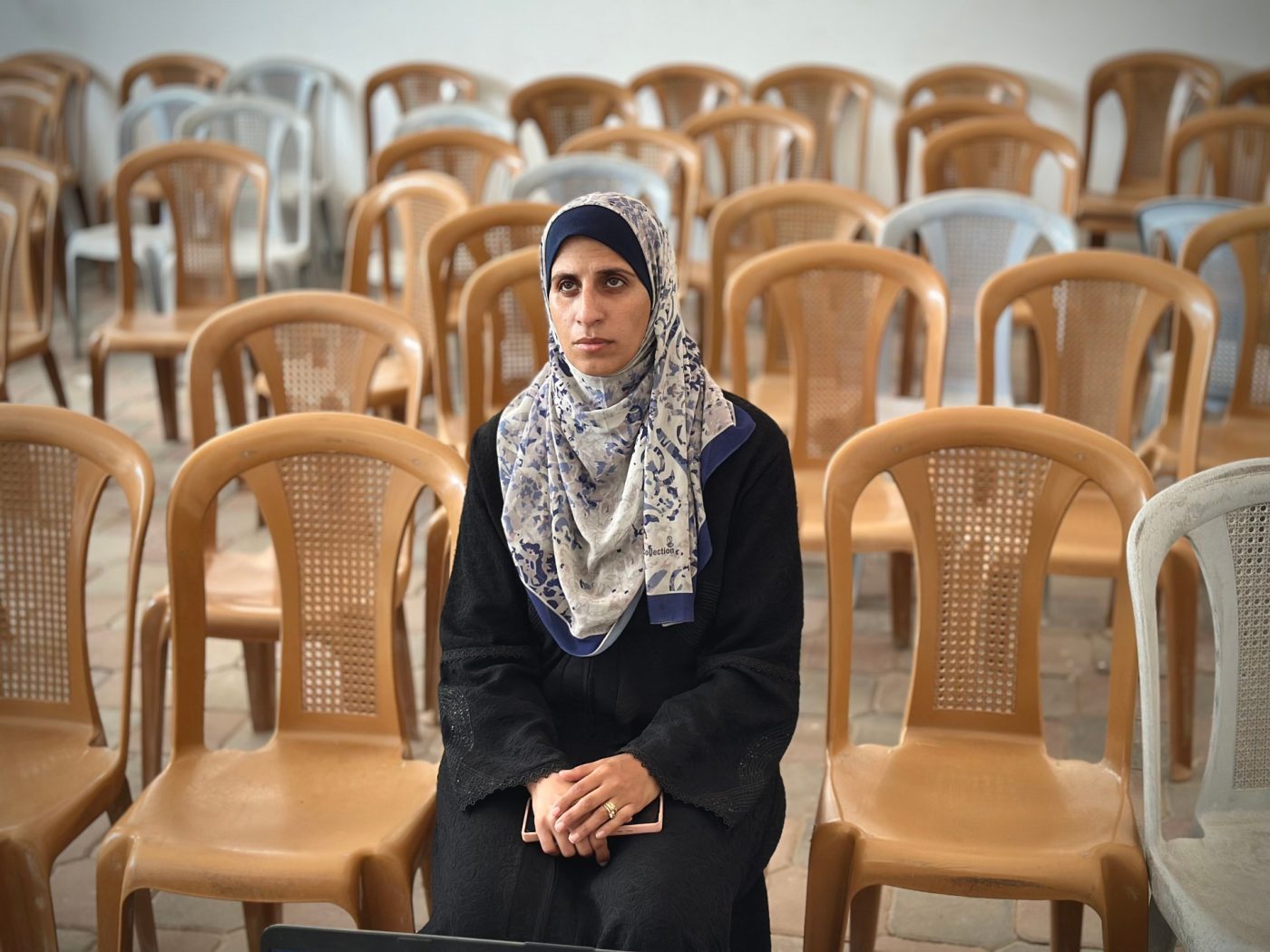

At Nasser Hospital in southern Gaza, Israa al-Areer sits with dozens of others watching a large screen where forensic staff display photographs of bodies returned from Israel. Each time a batch of remains arrives, hospital technicians photograph them and the images are shown in a hall where families scan each face and feature, hoping to find a sign of a lost loved one.
Israa is looking for two people: her husband, Yasser al-Tawil, and her brother, Diaa al-Areer. Both disappeared on October 7, 2023, when they were believed to be near the border fence as fighting erupted. She began making the trip from her home in Deir el-Balah to Khan Younis on October 14, after a ceasefire arrangement led to the return of dozens of bodies. That day Israel handed over 45 bodies as part of the deal; more followed in subsequent days.
“I couldn’t believe I had reached this point in my life: searching among the dead for my husband and brother, just to bury them and have a grave and a memory,” she said. Her mother and mother-in-law asked her, along with other relatives, to take on the painful task of identifying them because they felt they could not bear to see the images.
Israa last spoke with Yasser the night before the attacks, around 1am on the night of October 6–7. He promised to be home by morning. She woke to explosions and rockets and found his phone unreachable. Hours later a friend said Yasser and a group of friends had gone toward the eastern Khan Younis border area after news of the Hamas-led attack, then became separated in the chaos. That same day her brother Diaa, in his mid-20s, also vanished after going to the border with friends.
From the first day of the war, Israa and her family searched hospitals and shelters across Gaza. They contacted the Red Cross and the Palestinian Ministry of Health, but received no information. The family keeps a small hope they may have been detained, but increasingly believes both men are dead.
What greets families in the identification hall is often devastating. Many of the bodies have decomposed or bear marks of severe abuse, Israa and others say. She described seeing photos that made her “gasp in horror”: mouths filled with stones or nails, blindfolds and handcuffs, missing fingers or limbs, evidence of burns and crushing injuries. “It was savage, inhuman torture,” she said. “I nearly lost my mind comparing the image of my beautiful husband in my memory with the horrific photos on that screen.”
Forensic staff require clear identifying marks before releasing a body. Families scrutinise every photograph looking for scars, tattoos, clothing, or jewelry — Israa repeatedly looked for Yasser’s wedding ring. On one occasion she was convinced a displayed body was his and went to the hospital hoping to bury him, only to be told the underwear and the body shape did not match.
The process can produce both relief and renewed anguish. Israa watched a mother collapse in tears and relief when she recognised her son by his clothing. In other cases, multiple families argued over one set of remains until an old injury or other detail proved identity. Israa said she has seen a stark contrast in how different remains are handled and identified, and criticised the lack of local forensic resources. “To identify the Israeli bodies held in Gaza, full excavation and detection equipment were brought in, yet not even a single DNA testing device is allowed to enter here, while dozens of bodies are buried every day without identification,” she said.
In the two years since the disappearances, Israa has been unable to grieve properly. The war forced her family to move repeatedly — more than nine displacements across the enclave — and to live with constant fear. To keep herself from drowning in grief she returned to work as a freelance journalist for regional and international outlets.
She keeps returning to the hospital whenever new photos are released and checks the Ministry of Health’s online listings when she has internet access. Each session of scrolling through images is an ordeal that can take hours, and each visit ends with the same mixture of hope and heartbreak. Friends and relatives urge her to stop, to spare herself, but she cannot accept leaving even a chance unexplored. “What if my husband or brother were among those bodies and no one recognised them? I could never forgive myself,” she said.
Her daughter, Abeer, who was four years old when the war began, has been raised amid this uncertainty. Israa describes the crushing loneliness of spending nights alone with her child after the disappearances and the relentless worry that at any moment news could arrive.
At the centre of Israa’s search is a simple wish: to bury Yasser and Diaa properly and to have a place to mourn them. “All I want is to honour them with a burial,” she said. Until she finds confirmation — or a grave to visit — she keeps returning to the screen, comparing every face, every hand, every mark, holding on to the hope that identification will bring an end to the not-knowing that has consumed her family.