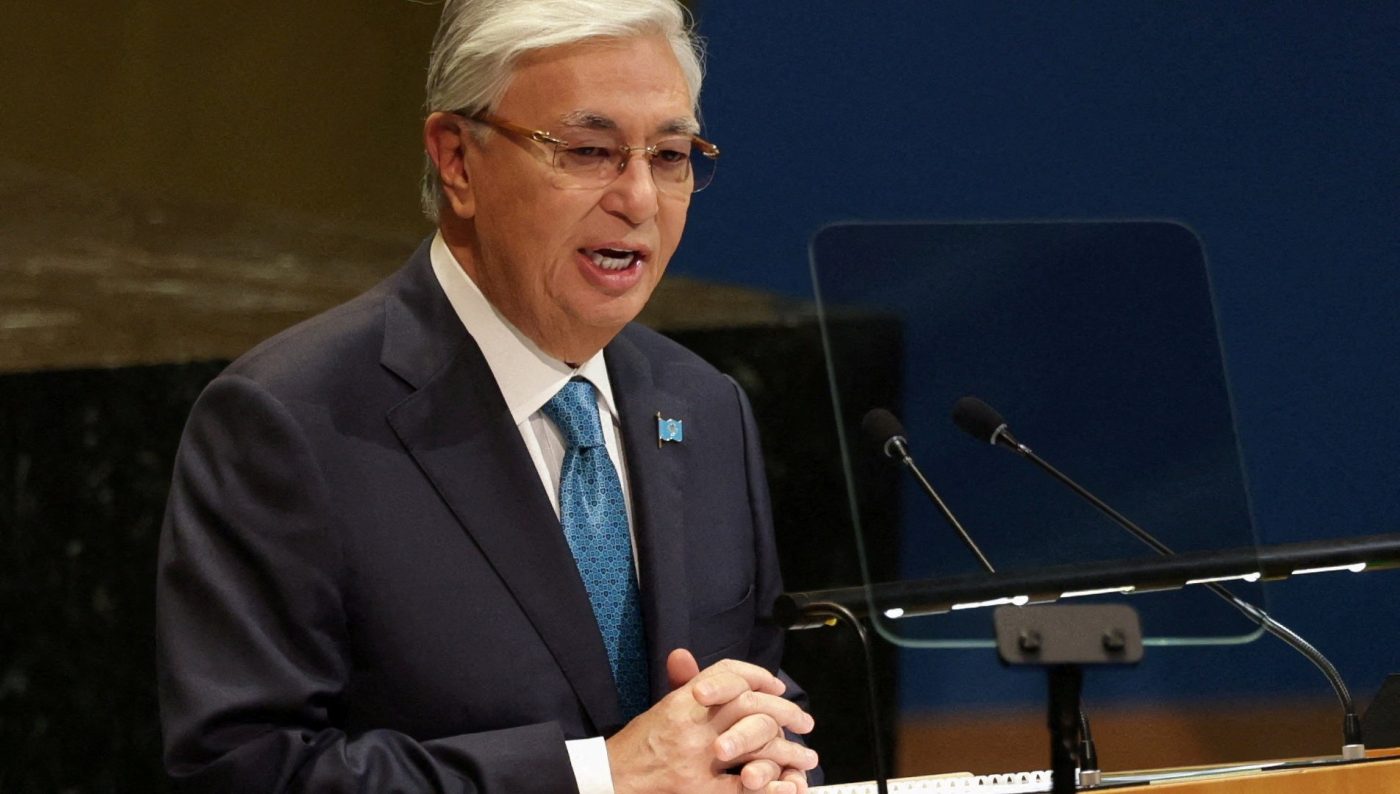

Kazakhstan announced it will join the Abraham Accords, the US-brokered normalisation framework between Israel and several Arab states, saying accession is a “natural and logical continuation” of its foreign policy.
The Central Asian country established diplomatic relations with Israel in 1992, shortly after gaining independence from the Soviet Union, and has maintained bilateral ties since then. Kazakhstan’s government made the statement ahead of a meeting between US President Donald Trump and Central Asian leaders, a move that coincided with President Kassym-Jomart Tokayev’s visit to Washington.
The announcement followed an earlier remark by US Middle East envoy Steve Witkoff that another country would soon join the Abraham Accords, remarks he made without naming the state. Kazakhstan cited dialogue, mutual respect and regional stability as the basis for its decision, according to reporting that referenced the government statement.
How formal accession will change the already established Kazakh-Israeli relationship is not yet clear. The two countries have signed several bilateral agreements over the years, and Israeli Prime Minister Benjamin Netanyahu visited Kazakhstan in 2016.
Kazakhstan’s move comes as it seeks to deepen ties with the United States. During Tokayev’s Washington visit, the two countries signed a cooperation agreement on critical minerals, underlining growing economic and strategic links.
The Abraham Accords originated during Trump’s first term, when he brokered normalisation agreements between Israel and the United Arab Emirates, Bahrain and Morocco. Those deals broke with the long-standing Arab consensus embodied in the 2002 Arab Peace Initiative, which conditioned Arab recognition of Israel on a negotiated Palestinian state.
Critics argue the accords sideline Palestinian aspirations and have done little to resolve the Israeli-Palestinian conflict or the broader occupation that rights groups have described as amounting to apartheid. Supporters, and successive US administrations, have nevertheless pursued expansion of the framework: former President Joe Biden also made widening the accords an early priority.
The accords have largely endured through recent regional turbulence, including a brutal war in Gaza that caused widespread destruction and a high Palestinian death toll. Several participating countries have continued trade and security cooperation with Israel despite ongoing violence and regional escalation, including strikes across the Lebanon-Israel border.
While the Abraham Accords have expanded Israel’s diplomatic and economic ties in the region, some Arab states — notably Saudi Arabia — have so far reiterated adherence to the Arab Peace Initiative as the basis for any normalisation. Kazakhstan’s accession marks a notable geographic expansion of the framework into Central Asia and highlights the continuing US push to broaden the accords.