
Polls show large majorities of Americans oppose military action against Venezuela, where tensions have been rising after a recent US campaign of strikes and a military buildup.
The US Senate on Thursday rejected a measure that would have required President Donald Trump to obtain congressional approval before launching military attacks on Venezuela. The effort failed by a 51 to 49 vote. Two Republicans, Senators Rand Paul and Lisa Murkowski, broke with their party and joined Democrats in supporting the restriction, but their votes were not enough to pass the bill.
Democratic senators argued Congress must be consulted before the country is drawn into hostilities. “We should not be going to war without a vote of Congress,” Senator Tim Kaine said on the Senate floor. Senator Adam Schiff warned that the administration’s posture appears aimed at regime change: “This is much more about potential regime change,” he said, adding that if war is the risk, Congress needs a role in the decision.
Supporters of the administration defended recent strikes and deployments as necessary to stop narcotics from reaching the United States. Senator Jim Risch, Republican chair of the Senate Foreign Relations Committee, praised the actions as protecting Americans from lethal drugs.
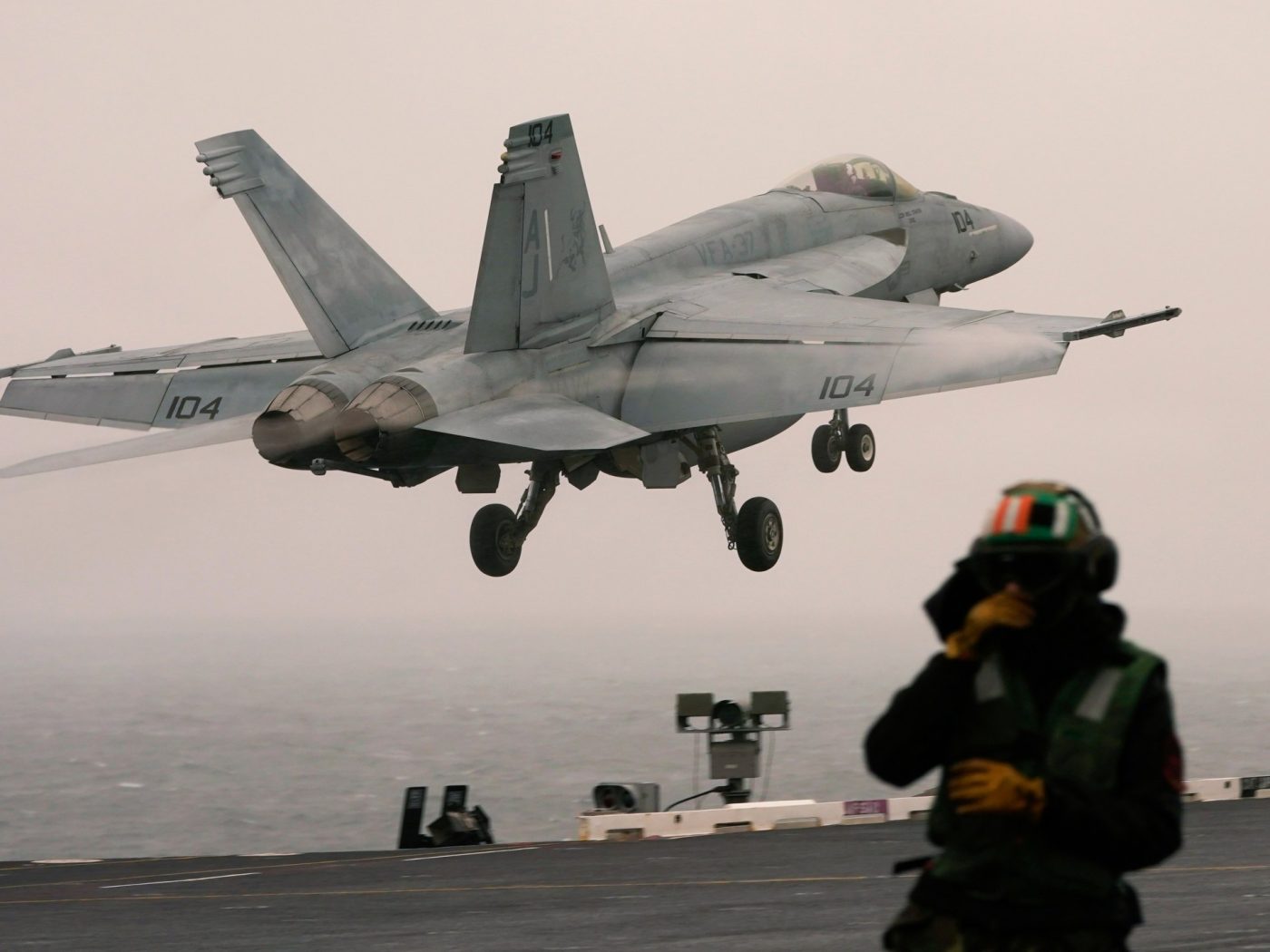
The vote took place against a backdrop of an expanding US military presence near Venezuela. The deployment includes thousands of troops, a nuclear submarine, a group of warships accompanying the aircraft carrier USS Gerald R. Ford, and repeated flights by long-range bombers. Flight-tracking data showed two US B-52 bombers flying along Venezuela’s coast and circling northeast of Caracas before returning to sea; this was at least the fourth time US military aircraft have flown near Venezuelan borders since mid-October.
The strikes the US has carried out against vessels in international waters off Venezuela and Colombia have killed at least 65 people. Washington alleges the targeted boats were carrying drugs, but has not presented publicly available evidence to substantiate those claims. Latin American leaders, some members of Congress, international law experts and relatives of the dead have described the attacks as extrajudicial killings and say many of those killed were fishermen.
Public opposition to military action is significant. A recent poll found only 18 percent of Americans support even limited military force to overthrow President Nicolás Maduro’s government. Separate research by YouGov showed 74 percent of Americans believe the president should not be able to carry out strikes abroad without congressional approval, consistent with the constitutional allocation of war powers.
While most Republicans have backed the strikes and embraced the administration’s framing of narcotics interdiction, a number of conservatives and other lawmakers have voiced unease about escalating military involvement in the region. Congress has occasionally tried to reassert its authority over foreign military engagements through the 1973 War Powers Resolution, which reaffirmed that the power to declare war rests with Congress.
Thursday’s vote reaffirmed the current balance in the Senate: lawmakers warned about the risks and legal questions raised by unilateral military action, but a majority were not prepared to impose new limits on the president’s ability to act in the region.