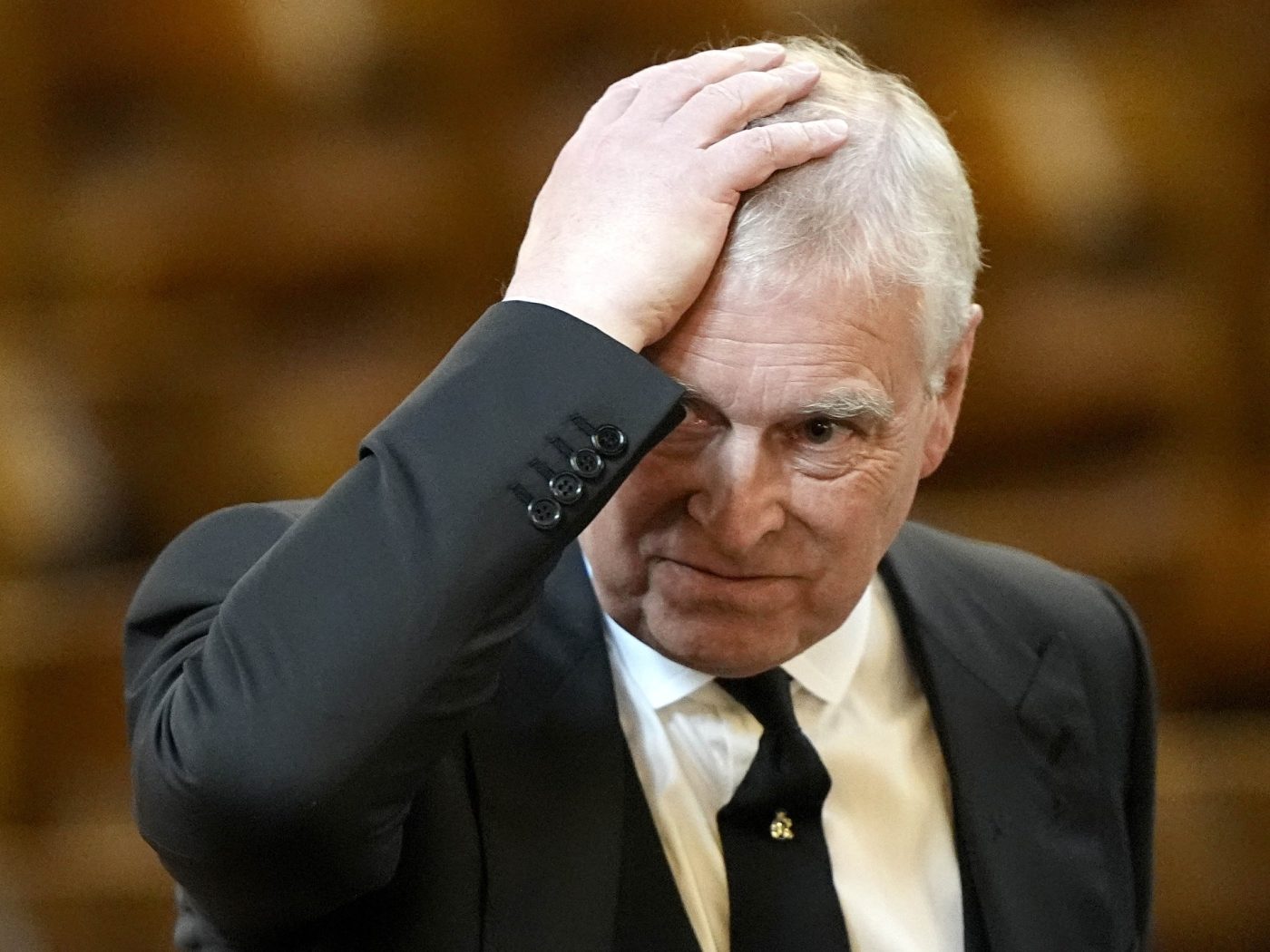

Members of the U.S. Congress have asked Britain’s former prince, Andrew, to give a formal, transcribed interview about his association with convicted sex offender Jeffrey Epstein, a development that follows King Charles III’s recent removal of Andrew’s royal titles.
A group of 16 Democratic representatives addressed a letter to “Mr Mountbatten Windsor” asking him to participate in the House oversight committee’s investigation into Epstein. The lawmakers said the committee seeks to identify Epstein’s co‑conspirators and enablers and to understand the full scope of his criminal operations. Citing well‑documented allegations and Andrew’s long friendship with Epstein, the letter said he “may possess knowledge of [Epstein’s] activities relevant to our investigation” and requested a response by November 20.
The letter references the posthumous memoir of Virginia Roberts Giuffre, who accused Epstein of trafficking her and alleged she was forced to have sex with Andrew on multiple occasions, including twice when she was 17. The lawmakers noted claims in the memoir that Giuffre feared retaliation for speaking out and that Andrew asked his personal protection officer in 2011 to “dig up dirt” on his accuser. Giuffre died by suicide in Australia in April. In 2022 Andrew paid a multimillion‑pound settlement to resolve a civil suit brought by Giuffre; he denied the allegations and has not been criminally charged.
U.S. lawmakers cannot compel testimony from foreign nationals, so it is uncertain whether Andrew will agree to appear before the committee. Still, the request is another public pressure point for the former royal, who has had a turbulent few weeks.
On October 30 Buckingham Palace said King Charles had initiated a formal process to revoke Andrew’s royal status following renewed scrutiny over his relationship with Epstein, who died in custody in 2019 while awaiting sex trafficking charges. The rare step to strip a member of the royal family of the styles “Royal Highness” and “Prince” was formalised in an announcement published in The Gazette, the United Kingdom’s official public record. As part of the changes, Andrew was evicted from Royal Lodge in Windsor and moved into private accommodation. He earlier agreed to stop using the title Duke of York amid the new allegations.
Separately, attention is turning to Epstein’s Zorro Ranch in New Mexico. Two state legislators have proposed creating a “truth commission” to investigate alleged crimes at the secluded desert property, which Epstein purchased in 1993. The ranch, a hilltop estate with a private runway near Stanley roughly 56 kilometres south of Santa Fe, has been cited by several survivors as a site where sex‑trafficking activity occurred.
State Representative Andrea Romero, who presented the idea to the House Courts, Corrections and Justice Interim Committee, said the commission would seek to determine what officials knew, whether crimes were reported or ignored, and how the state can prevent similar harm in the future. “There’s no complete record of what occurred,” she said. Representative Marianna Anaya, speaking with Romero, argued that state authorities missed opportunities over decades to intervene.
New Mexico law allowed Epstein to avoid registering locally as a sex offender long after he was required to do so in Florida following a 2008 conviction for soliciting a minor for prostitution. Republican Representative Andrea Reeb told the committee she believed New Mexicans have a right to know what happened at the ranch and said she did not expect the commission to be politically motivated. For the proposal to advance it will need approval from the state House when the legislature reconvenes in January.
The congressional letter and the renewed focus on Zorro Ranch add to ongoing efforts by lawmakers and survivors to document Epstein’s network and the ways authorities may have failed victims. UK and U.S. actions so far include public inquiries, civil suits, and criminal investigations; the recent moves signal continued scrutiny of those who associated with Epstein and of institutional responses in places tied to his activities.