
An Israeli drone strike east of Khan Younis in southern Gaza killed at least two people, including a child, Al Jazeera reporters in the territory said. The Israeli military said those killed had posed “an immediate threat” to its forces.
Hamas accused Israel of “daily and continuous violations” since a ceasefire began on October 10, saying bombardment and demolition operations have continued across the enclave. In a Telegram statement, Hamas said Israeli attacks had killed 271 people — more than 90% of them civilians — and wounded 622 since the truce took effect.
Reporters and local officials described intensified demolition activity inside the so-called “yellow line,” the temporary withdrawal boundary established under the ceasefire. Correspondents in eastern Khan Younis reported that multi-storey buildings and houses are being targeted, and confirmed that residential blocks in central Gaza have been destroyed. Satellite imagery and field footage show large areas reduced to rubble.
Restrictions on aid deliveries remain a major point of contention. Gaza authorities and aid workers say Israel has limited the number of trucks allowed in despite the ceasefire terms. Hamas claimed Israel refused to permit at least 600 aid trucks per day — including about 50 carrying fuel — that the territory needs. On Sunday, 270 trucks entered Gaza through the Karem Abu Salem (Kerem Shalom) and al-Karara (Kissufim) crossings: 126 carrying humanitarian aid, 127 commercial consignments, 10 fuel trucks and seven with cooking gas.
Although aid flows have increased since the truce, shortages of food, medicine, clean water and other essentials persist and many people remain homeless after almost two years of conflict. UNRWA has said 500–600 trucks of supplies are needed daily to meet basic needs. John Whyte, UNRWA’s senior deputy director for Gaza operations, told The Journal that Israel has barred UNRWA vehicles and required supplies to be handed to other agencies with UNRWA branding removed, resulting in major logistical delays. Al Jazeera reported that in northern Gaza, where many displaced families are returning, the UN has recorded no direct aid entry for 75 days, leaving residents queuing for water and struggling to afford basic food.
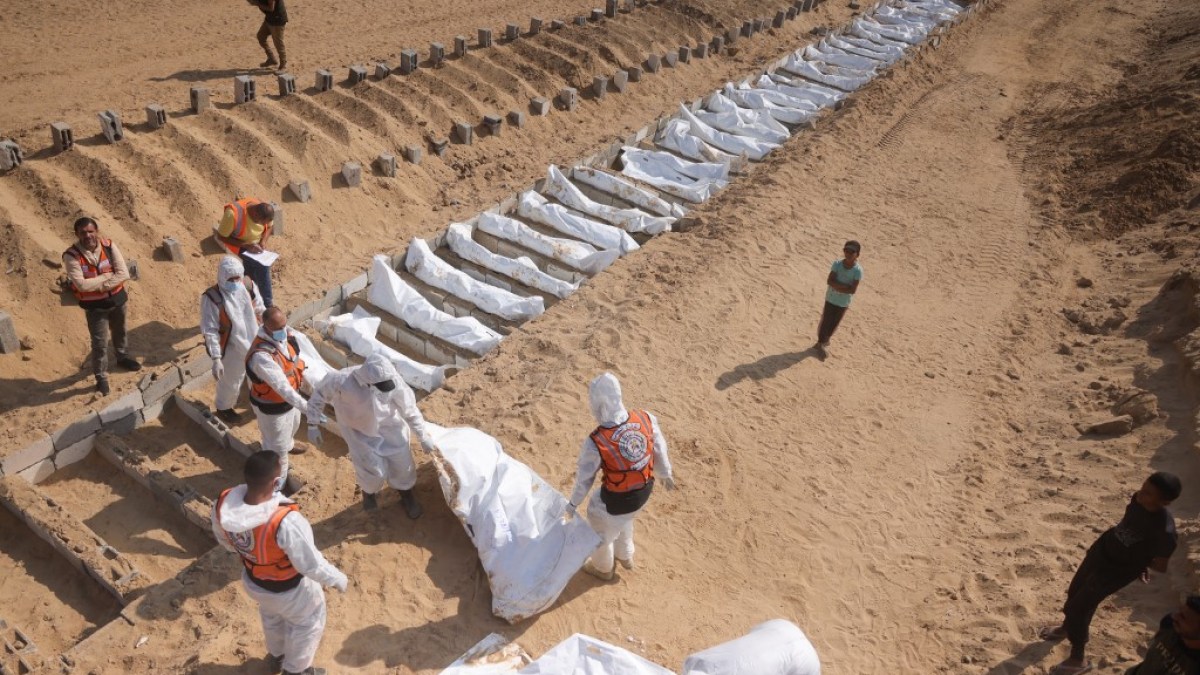
Under the ceasefire’s body-exchange arrangement, Israel handed over the remains of 15 Palestinians to Gaza authorities on Monday. The Red Cross transferred the bodies to Nasser Hospital in Khan Younis, Wafa reported. This was the 12th such exchange under the deal, bringing the total number of bodies returned to 315; Wafa said only 89 have been identified so far and many showed signs of decomposition and alleged abuse. Hamas said it had met its obligations under the agreement, handing over 20 living captives within 72 hours and returning 24 of 28 bodies while providing coordinates for others located in areas under Israeli control.
The World Health Organization announced that al-Kheir Hospital in Khan Younis has resumed operations after months of closure due to Israeli attacks. WHO said it helped restore power, sanitation and water systems, supplied medical equipment and supported reopening a new 20-bed nutrition stabilization centre. The facility brings Gaza’s total number of such centres to eight; these units treat children suffering from severe malnutrition complicated by infections and dehydration.