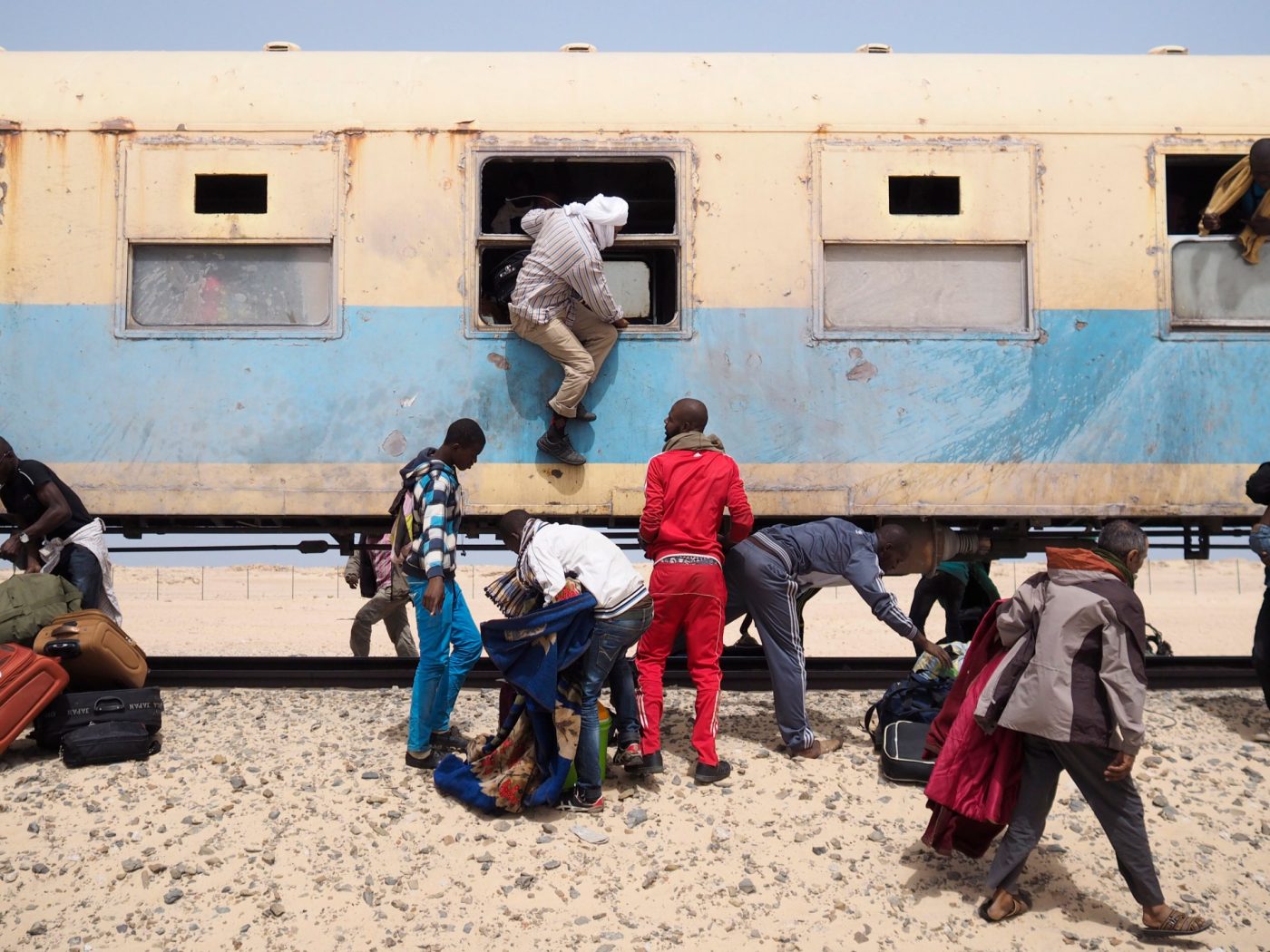

Nouadhibou, Mauritania — Omar*, a 29-year-old bricklayer from rural Gambia, arrived in Mauritania in March hoping to earn higher wages. He shared a single-room shack with four friends in Nouadhibou and found casual construction work that paid two to three times what he could make at home. He used his savings to support his large family and pay his younger siblings’ school fees.
In August, armed National Guard pick-ups began operating in the city and police started widespread roundups of migrants for detention and deportation. Construction sites and other informal employment hubs were targeted first. Without a residence permit, Omar stopped going to work and confined himself to the cramped compound in Ghiran, a neighbourhood with many migrants, leaving only briefly to buy food.
Police raids soon moved from public work sites into people’s homes. Respondents told Al Jazeera that officers forced entry day and night, breaking doors when occupants were slow to answer. One evening, Omar and his housemates fled over rooftops to avoid a sweep but returned later that night because they had nowhere else to sleep. With no income they survived on a single small bowl of rice a day, and occasional fish a friend risked catching at night.
Many migrants Al Jazeera spoke to in Nouadhibou, Nouakchott and the border towns of Rosso (on both sides of the Senegal River) have since been expelled from Mauritania, sometimes to a third country. The Mauritanian Association for Human Rights (AMDH) estimated roughly 1,200 people were deported in March alone, including about 700 who held residence permits. The government has not published official deportation totals. A government spokesman said 130,000 migrants entered Mauritania in 2022 and that only 7,000 renewed residence permits that year.
Officials have defended the campaign as lawful migration control. Interior Minister Mohamad Ahmed Ould Mohamed Lemine told parliament Mauritania has the right to regulate foreigners’ movements and said authorities acted “with respect for human dignity,” promising food, water, medical access and the right to keep personal possessions. A separate government statement earlier dismissed some reports of deportations as exaggerated. Rights groups and opposition politicians, however, denounced the operations as “cruel and degrading.”
Observers have noted similarities with smaller-scale deportation drives in 2009 and 2012. Some analysts also highlighted the timing: the crackdown followed a February 2024 European Commission announcement of a 210 million euro migration partnership with Mauritania. The package included support for security and “migration management,” alongside investments in green energy, jobs and services. The EU says it has scaled up support while insisting protection and human rights remain fundamental principles.
Nouadhibou, a windswept port city on a narrow peninsula, has long attracted migrants from West and Central Africa to informal jobs in construction, fishing and processing. The city’s migrant population is highly visible in markets and the port; a 2020 International Organization for Migration estimate placed migrants at around 32,000 people, roughly a fifth of the city.
Those living and working there report widespread fear, harassment and extortion. An Ivorian labourer said he was arrested three times in a week; on the first occasion 11 detainees were released after pooling about $200 to bribe officers. On the second sweep, another group paid bribes to secure release. On a third raid at an airport construction site, more than 60 men were detained; some paid between $11 and $33, while others were freed only after employers intervened.
One deportee showed immigration stamps attesting to temporary legal entry, but an officer ignored the documents and arrested him anyway. After five days in custody, the officer asked, “Now we will do business. How much can you pay?” The detainee paid $100 to be released.
Arrests have gutted migrants’ livelihoods. Many now only risk going to work on days they hear there will be no raids. Others feel trapped: unable to earn enough to return home, yet unable to save while under constant threat. “We don’t know what to do,” said an electrician who narrowly escaped multiple arrests.
Detention conditions described to Al Jazeera were harsh. Detainees say they were often denied food or given one poor meal a day—typically bread with canned fish—and that water access was restricted. Several people said they were forced to urinate into shared buckets or empty bottles because toilets were unavailable. Guards sometimes demanded extortionate prices for food or phone calls; a group pooled money to pay for a failed embassy call and were still charged.
Women and children have also been detained. A 31-year-old mother of two from Sierra Leone was seized while buying medicine for a sick infant and held in a facility she called a “cattle shed.” After pleading, she was allowed to make a call and her neighbour brought her children to the centre; they stayed together for two days with minimal food until a bribe secured their release. Some families remain separated: one man described pleading and crying to police as his four-year-old daughter was left behind.
Those destined for deportation are usually taken by bus to Nouakchott detention centres and then sent to border crossings such as Gogui (toward Mali) or Rosso (toward Senegal). Detainees reported being chained together during transport and physically mistreated. At Rosso, migrants have their fingerprints recorded at the Mauritanian border post and are then placed in the port area to await a ferry to the Senegalese side of the river. Many are denied entry into Senegal, including some who still held national ID cards that should have allowed visa-free access. Border guards sometimes instruct deportees to return to Mauritania.
Left stranded, many migrants pay smugglers to ferry them across the river at night to remote drop-off points in marshland. From there they wade to dry land and try to reach towns such as Rosso, but life is precarious. Some are arrested by Senegalese police and returned to the no-man’s land between the posts, forced again to pay for clandestine crossings. Those who cannot afford onward travel sleep on the streets and live on pooled donations.
Omar managed to return to The Gambia a week before his interview with Al Jazeera. He said he felt relief at being back where no police were chasing him, but he also faced immediate hardship: rainy-season labour demand in The Gambia was low and he could not find work. “The schools are opening, and my family is asking, ‘Where is the bag of rice?’” he said. Despite everything, he said he might return to Nouadhibou if deportations stopped and the work resumed.
Al Jazeera reached out to Mauritanian authorities responsible for the campaign, including the government spokesman, the Gendarmerie and the Interior Ministry, but had received no response at the time of reporting.
*Interviewees requested use of a single name for safety reasons.