Haze Pushes Singapore Air Quality to 2026 High as Fires Rage Across Sumatra and Kalimantan
Smoke from fires in Sumatra and West Kalimantan pushed Singapore's 24-hour PSI to 192 on Oct. 9, the highest this year, as schools closed in parts of Malaysia.
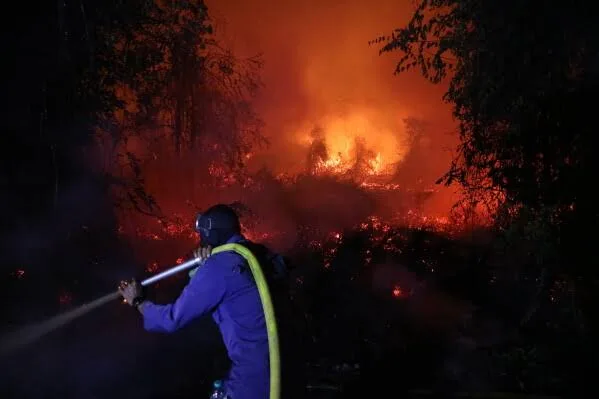
Smoke from fires in Sumatra and Kalimantan has pushed air quality in Singapore to its worst level of the year, with the 24-hour Pollutant Standards Index (PSI) in the central region reaching 192 on Friday, as the transboundary haze that began in August continues to blanket parts of Indonesia, Malaysia and Singapore.
The reading, recorded from 5 p.m. on Oct. 9, was the highest of 2026 and edged toward the "very unhealthy" range, which starts above 200. It followed a morning in which the central region climbed from 170 to 181 by noon, beating the previous 2026 high of 167 set on Sept. 29. Every region of the island has been in the unhealthy range of 101 to 200 on the 24-hour index.
Singapore and Malaysia under pressure
Singapore's National Environment Agency said smoke plumes from southern and central Sumatra and West Kalimantan were drifting toward the island under prevailing south-easterly and southerly winds, and warned of a continued risk of severe haze. It advised people to cut back on strenuous outdoor activity, with children, older adults, pregnant women and people with heart or lung conditions urged to take extra care.
The government convened its Haze Task Force, and the haze hung over the Formula 1 Singapore Grand Prix weekend from Oct. 9 to 11. School closures in Singapore are considered only if the forecast 24-hour PSI reaches the hazardous range above 300.
In Malaysia, schools closed in parts of the country on Friday. Batu Pahat in Johor recorded an Air Pollutant Index reading of 203, in the "very unhealthy" range, on Oct. 6. In its Sunday update, the agency said moderate smoke haze still covered parts of Singapore, Peninsular Malaysia, Kalimantan, Sumatra and western Sarawak, with many stations across the region reporting readings from unhealthy to hazardous.
Why this year is so severe
The fires are being fed by a strong El Niño combined with a positive Indian Ocean Dipole, a pairing that suppresses rainfall across maritime Southeast Asia. Indonesia's meteorological agency, BMKG, has projected below-normal rain over Sumatra and Kalimantan through at least October, and expects the rainy season to start later than usual across about 61% of the country, with most of Sumatra and Kalimantan peaking in December.
Dry conditions turn peatland into fuel. Once a fire takes hold in peat, it can smolder underground for weeks and release large amounts of fine particulate matter, which makes surface water and aerial drops far less effective.
What governments are doing
Indonesia has deployed more than 50 aircraft for water bombing and cloud seeding over Sumatra and Kalimantan, and Japan sent three CH-47 Chinook helicopters to help. Police have been investigating 112 people suspected of starting fires, and five companies have had their licenses suspended, with President Prabowo Subianto calling for tougher penalties. Cloud seeding has been constrained at times by a lack of suitable rain clouds.
Malaysia, Singapore and Brunei have also carried out cloud seeding. Greenpeace has linked plantation groups with Singaporean and Malaysian ties to the sources of this year's fires, a claim that adds to long-running pressure on companies operating across borders. Singapore's Transboundary Haze Pollution Act, enacted in 2014, allows action against firms whose activities cause haze affecting the country.
What happens next
Relief depends largely on rain. The agency said showers are forecast in parts of Peninsular Malaysia, Sumatra and Borneo and could help locally, but areas with prolonged dry weather could still produce severe haze. With the rainy season forecast to arrive late, the risk of further bad air days is likely to stay with the region for weeks.
Filed under World